
Drainage That Handles Heavy Runoff Seasons
Downspout Installation in Duluth for properties facing foundation water pooling and erosion concerns
Heavy rainfall and spring snowmelt in northern Minnesota create drainage conditions that can direct thousands of gallons toward a home's foundation each season. Fast Lane Seamless Gutters installs downspouts custom-sized and positioned based on your roof design, slope, and the specific drainage patterns your property faces. Proper placement moves water far enough from foundation walls to prevent the soil saturation that leads to basement seepage and landscape erosion.
Downspout installation involves more than attaching a tube to a gutter outlet—it requires evaluating where water naturally flows on your property, how much runoff your roof generates during peak weather events, and where that volume can be safely dispersed without creating standing water or washing out plantings. In Duluth, where late-winter thaws can produce sudden high-volume runoff, undersized or poorly positioned downspouts quickly become overwhelmed, sending water directly against foundation perimeters instead of away from the structure.
Schedule a drainage evaluation to determine optimal downspout placement for your property's specific runoff conditions.
What Proper Downspout Placement Prevents Long-Term
Correctly installed downspouts account for roof square footage, gutter capacity, and the distance water must travel before reaching safe dispersal points. Each downspout location is selected to prevent overloading any single outlet during storms, which means evaluating corner placements, calculating drainage loads, and ensuring outlets don't discharge onto walkways, driveways, or areas where water will pool against the building.
After installation, you'll notice water exits the system at designated points rather than spilling over gutter edges or trickling down siding. Properly functioning downspouts eliminate the soil erosion channels that form along foundation lines, the ice dams that develop when misdirected water refreezes on pavement, and the basement moisture problems that begin with saturated perimeter soil. Your landscaping stays intact because water reaches dispersal areas without cutting through mulch beds or washing away ground cover.
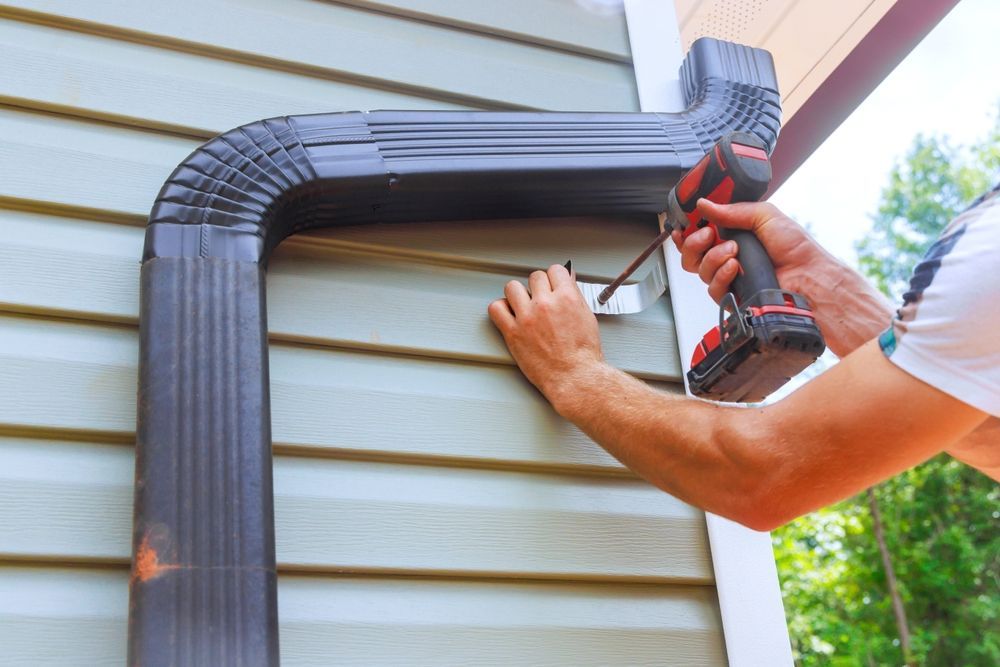
Installation includes securing downspouts to exterior walls with fasteners spaced to handle wind loads and connecting sections that won't separate under the weight of ice buildup. Extensions or splash blocks are positioned to carry water at least six feet from the foundation, adjusted based on your property's grade and drainage capacity.
Questions Homeowners Ask About Downspout Systems
Duluth's weather patterns—particularly the freeze-thaw cycles and heavy spring runoff—raise specific questions about how downspouts should be configured and maintained.
How many downspouts does a typical home need?
Most homes require one downspout for every 30 to 40 feet of gutter run, but properties with steep roofs or large square footage may need additional outlets to handle higher runoff volumes without overwhelming the system.
What happens if downspouts discharge too close to the foundation?
Water saturates the soil immediately surrounding the basement or crawlspace, creating hydrostatic pressure that forces moisture through foundation walls and increases the risk of structural settling as soil compacts unevenly.
Can downspouts be routed underground?
Underground drainage lines can direct water to more distant dispersal points, but in Duluth they must be installed below frost depth and designed with cleanout access since freeze-thaw cycles and sediment can cause blockages that aren't visible from ground level.
When should downspout extensions be adjusted for winter?
Extensions should be repositioned in late fall to prevent ice buildup near walkways and ensure that snowmelt discharges away from areas where refreezing creates slip hazards or blocks drainage paths.
Why do some downspouts include elbows or offsets?
Offsets allow downspouts to navigate around architectural features like bay windows or to position outlets away from obstacles, ensuring water reaches safe dispersal areas without splashing back onto the building or creating erosion directly below the outlet.
Fast Lane Seamless Gutters evaluates your roof layout and site drainage to recommend downspout configurations that prevent the foundation and erosion problems common in areas with significant seasonal runoff. Request a property assessment to identify where your home's drainage system needs reinforcement.